Category Archives: Uncategorized

Christ working in us for God’s glory

shutterstock_17183986

“Very truly I tell you, whoever believes in me will do the works I have been doing, and they will do even greater things than these, because I am going to the Father. And I will do whatever you ask in my name, so that the Father may be glorified in the Son. You may ask me for anything in my name, and I will do it.” (John 14: 12-14)

The first great need of any man who has a troubled heart or his Christian life isn’t lived to its full potential is to believe, to get back to the place of believing. This sounds too simple. Yet it is what Christ told His disciples before His death, resurrection and ascension. If you believe in Me, essentially He told them “you will do the works I have been doing.” Belief also opens up the door to faith and the effects of faith in our life.

The disciples who walked with Jesus witnessed that He had rebuked a demon which had caused a sickness in a boy who was then healed instantly. Conversely, having trouble achieving similar results in their ministry, they asked Him: “Why could we not cast it out?” to which He responded, “Because of your little faith” (Matthew 17: 18-20 ESV)

After His resurrection, our focal scripture indicated that Jesus promised His disciples that they would be able to do what they cannot do now, and what He used to do for them. By His resurrection and ascension, He works in them by the power of the Spirit – to effectively bring the power of the Spirit into their action, after He has departed.

Our Lord’s departure from the world is not the conclusion of His activity in the world amidst personal, political and ideological problems that humanity faces today. He is present in our ministries to our beloved Christian friends, and to those who likewise believe and those faltering in their belief. He is continuing together with us in His redemptive work to reach out to find those struggling with a profound understanding and a lack of objective effectiveness in their particular mode of faith – whatever the culture.

He is not absent in our lives individually nor from the ministration of common grace to the countless millions of men and women worldwide who have, who will and yes to those who may come to believe on His name for salvation.

He still is an ever-present power, and though He has passed through death on our behalf, and been removed from our physical sense perception, He still operates upon the things around us and moves events to coincide with His providences according to His will in our lives. Christ is all-powerful and ever-presently working in our lives! The continuous influence of His life continues. It is a present power in all ages.

Belief in Christ as our Redeemer and faith in His active life in us via His Spirit is necessary for a vibrant and joyous Christian experience. If you are lonely, He brings companionship to the solitary. He offers calmness in calamity, gives peace while weighing the complications of our faith and our weaknesses. We must grasp that the living Christ is working in us for His Father’s glory and outreaching to each of us, forth-putting His powers of influence and ministerial energy in His church today.

Before His ascension Jesus said: “Go into all the world and preach the gospel to all creation” (Mark 16:15 NIV) In Mark’s narrative, we read that “After the Lord Jesus had spoken to them, he was taken up into heaven and he sat at the right hand of God” (vs. 19) As He worked with the disciples, He will work with us as we minister His word to others sharing the Gospel. “Then the disciples went out and preached everywhere, and the Lord worked with them and confirmed his word by the signs that accompanied it” (vs. 20) At the end of our Lord’s life on earth, there were one hundred and twenty disciples in Jerusalem and five hundred in Galilee. He told the disciples greater things you will do – the greater meaning the expansion of His kingdom on earth through the promulgation of the Gospel.

Now that we understand the need for believing on His name, and on having faith to do His works of expanding His kingdom, we need also a life of prayer which confess our complete dependence on Him. I go back to our main verse: “I will do whatever you ask in my name, so that the Father may be glorified in the Son. You may ask me for anything in my name, and I will do it.”

In my name, means, not a rote prayer as we often may do, finalizing it with repeated words ‘in Jesus name, Amen.’ Rather it means in His character, in His same faith in His Father and our total dependent connection to Him. This unity with our Lord is exactly what we need to sense His power working in our lives with all whom we connect. Jesus prayed for His disciples and you and I, “that they may all be one, just as you, Father, are in me, and I in you, that they also may be in us, so that the world may believe that you have sent me” (John 17:21 ESV) This is the secret to the continuum of believing in His work on earth — to be One with Jesus Christ via His indwelling Spirit. The parable of abiding in the vine teaches this truth: “Whoever abides in me and I in him, he it is that bears much fruit, for apart from me you can do nothing” (John 15:15 ESV)

Believe in His operative work in you by faith; connect to the living Christ just as He depended on His Father for guidance and success in His walk on earth and for our eternal future in His redemptive work of salvation.

Influencing others for Christ

The Son of Man has come eating and drinking, and you say, ‘Look, a man who is a glutton and a [heavy] wine-drinker, a friend of tax collectors and sinners [including non-observant Jews]” (Luke 7:34 AMP)

In the world but not of it. Being sociable does not necessarily equate to being a friend whom you relate to as a brother or sister in Christ. We must be kind, and a friend — friendly to those we associate with — in extended family circles, in business, and in civil life in general — a sign of possessing influential character.

Jesus befriended Mathew, an infamous tax collector; immoral women, even one caught in adultery about to be stoned to death by the “religious” mob. He also was open to hearing a Roman centurion’s request to heal his servant (see Luke 7:34-50). All of these “sinners” religiously condemned by the Pharisees, and teachers of the law in Israel (the leadership) were not influenced to love God.

Nevertheless, they were moved by the non-partisan love of Jesus, who perceived their potential faith in Him and forgave their sin. Jesus noted that his disciples had a mission that must be carried out in a sinful world.

They are not of the world, even as I am not of it. Sanctify them by the truth; your word is truth. As you sent me into the world, I have sent them into the world. For them, I sanctify myself, that they too may be truly sanctified”. (John 17:16-19 NIV)

Association in ministry differs from collaborating with unbelievers as intimate friends, or marrying another with whom you would have children. The Apostle Paul was always sharing the Gospel of Jesus Christ to others. Many became Christian brothers and sisters in Christ through his efforts. God’s purpose is that the Gospel must intergenerationally influence family members from the parents and grandparents, and fellowship amongst true believers for a continuance of His kingdom on earth.

Others like Paul and Christ’s disciples were called to separate themselves unto the calling to go out into the whole world — yes, among blatant sinners — and preach that they too have hope if they place their faith in Jesus — the hope of eternal life in Christ. Read the conversation that Jesus had with the Samaritan woman at the well. He knew she was living in sin, yet he activated her faith with discretion and kindness. He perceived her as a child of God in the making. She perceived Him as a prophet in her awakening. The gentle patience of Christ opened her mind to hear Him tell her that He was the Messiah whom she awaited! She proclaimed Him to others in her town who all rushed out to see the Lord (see John chapter 4).

shutterstock_54167605_2

Paul spent time ministering to people in prison and to Greeks in Athens who had many false ideas about God. The encouragement and power of the indwelling Spirit must accommodate sharing the Word of God, as Satan will try to twist its meaning:

“After fasting forty days and forty nights, he was hungry. The tempter came to him and said, ‘If you are the Son of God, tell these stones to become bread.’ Jesus answered, “It is written: ‘Man shall not live on bread alone, but on every word that comes from the mouth of God.’” (Mathew 4:2-4 NIV)

Be friendly in the context of sharing the Good News Convincing someone else that your godly ideas are good comes from association and discussion in the context of witnessing for Jesus while trusting the Holy Spirit to open the heart to God’s influence.

Christians meet at the Cross Guard against the mob mentality that “only my church owns the right doctrine”. Basing your viewpoints on the Word of God, use the logical mind, not the emotional mind to weigh the motives of men or women you would befriend. The war between the British Protestants and Catholic Irish in Northern Ireland would never have subsided without association and negotiation. When we truly meet Jesus, in our heart, in our mind’s eye, all unreasonable prejudice is removed. Together we all realize that He came to redeem all men who would see the grace offered at the foot of the Cross.

Self-will can avoid acting on the revealed will of God

“Pray that the Lord your God will tell us where we should go and what we should do.” (Jeremiah 42:3 ESV)

The people of Judah came to the prophet Jeremiah asking for his prophetic guidance to know if they should go down to Egypt to avoid King Nebucannezar of Babylon and his armies.

“I have heard you,” replied Jeremiah the prophet. “I will certainly pray to the Lord your God as you have requested; I will tell you everything the Lord says and will keep nothing back from you.” Ten days later Jeremiah gets the answer from the Lord:

“…hear the word of the Lord, you remnant of Judah. This is what the Lord Almighty, the God of Israel, says: ‘If you are determined to go to Egypt and you do go to settle there, then the sword you fear will overtake you there, and the famine you dread will follow you into Egypt, and there you will die. Indeed, all who are determined to go to Egypt to settle there will die..not one of them will survive” (Vss 16-17)

Often we feel that we have the right intention to do a certain thing, go somewhere, advise someone, begin a new job, leave a spouse, and some go as far as to seek the Lord’s will as the people of Judah did. Notice that Jeremiah, speaking God’s word said “‘If you are determined to go to”, and they were determined to go, and to disobey.

The people had even said: “May the Lord be a true and faithful witness against us if we do not act in accordance with everything the Lord your God sends you to tell us. Whether it is favorable or unfavorable, we will obey the Lord our God, to whom we are sending you, so that it will go well with us, for we will obey the Lord our God.” (Vss 5-6)

They quickly asserted their own determination, contrary to the Lord’s revealed will — and clearly though it was unfavourable to follow the Lord’s will: “all the arrogant men said to Jeremiah, “You are lying! The Lord our God has not sent you to say, ‘You must not go to Egypt to settle there’.” (Jeremiah 43:2)

Consider your own actions, prayers, and self-determined will. How do you behave when the revealed will of God is clear in His Word — do your own plans ever get altered or reconfigured to line up with the Word of God? The danger is this: Self-will can avoid acting on the revealed will of God.

Remembering Jesus at the Cross

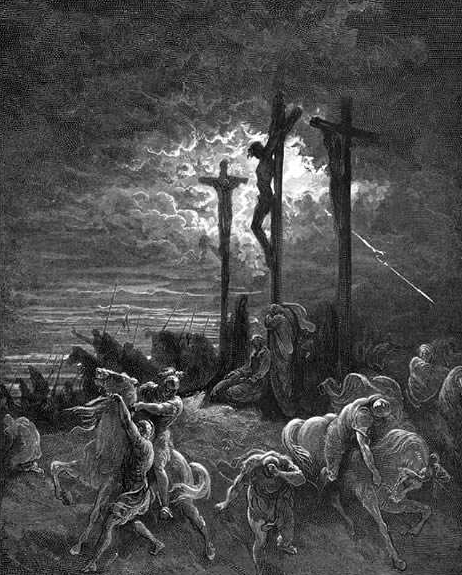
“And Jesus said, ‘Father, forgive them, for they know not what they do.’ It was now about the sixth hour, and there was darkness over the whole land until the ninth hour, while the sun’s light failed. And the curtain of the temple was torn in two. Then Jesus, calling out with a loud voice, said, ‘Father, into your hands I commit my spirit!’ And having said this he breathed his last.  (Luke 23:34;44-46 ESV)

Jesus at the Cross GP

Some misrepresent God’s character as one of Judgement before Mercy is even considered. In some cultures and religions, hatred triumphs over Love. Christ expressed His Character of Love by enacting a strategy planned since the beginning of time with His Father to redeem man from himself, from his wrong ideas of God who created him.

At 3:00 PM Good Friday, 2000 years ago, Christ set all mankind free from all misconception. Judgement and Mercy kissed each other as He took our judgment: His death ransomed us from all our sins — Love and Mercy expressed for the world to witness for eternity. To the world His Gospel of Love triumphs, not with violence, fear or intimidation, but with peace and joy in His righteousness offered to each who accepts Him.

I invite you to show some Gratitude, take a few moments to contemplate the cost of our Salvation, offer Praise, knowing Eternal Life is ours in Christ. I invite you to remember Him together as we take a moment of quiet Thankfulness today at 3:00 PM, the time of His death. Love is rarely honoured.

“Now when the centurion saw what had taken place, he praised God, saying, ‘Certainly this man was innocent!’ And all the crowds that had assembled for this spectacle, when they saw what had taken place, returned home beating their breasts” (Luke 23:47-48 ESV)

Why love often misses the mark

And because lawlessness will be increased, the love of many will grow cold.”  (Matthew 24:12 ESV)

Jesus taught that just prior to His return as judge over mankind in power and great glory with all His angels, that every form of law based on the Word of God would be abandoned. (see Matthew ch. 24)

This would result in a breakdown of love in the framework of relationships, the most important being marriage, within the family. This shift in viewpoint in law has to do with the shift in Biblical values occurring in the world. Erich Fromm explains in the Art of Loving that our viewpoint of loving others is directly related to our view of Loving God:

“the disintegration of the love of God has reached the same proportions as the disintegration of the love of man.” 1

Family is the one place where we can learn to love and grow, according to the principles of faith.

Fromm further points out that there “is a regression to an idolatrous concept of God, and a transformation of the love of God into a relationship fitting an alienated character structure.” An an idolatrous concept of God is easy to see in the world we live in. Witness the movies centering on hero worship and those based on Mythology such as Thor. Disney has made the myth its primary income model. They have purchased Marvel and Star Wars – the last movie The Force Awakens has earned well over 1 billion dollars in the first week, setting a record at the box office.

As people do not understand nor have Biblical principles or faith, they become anxious, finding themselves without an aim except the one to move ahead without principles or filters as to what they hold as life-shaping values and purpose. Fromm, one of the world’s renowned psychologists indicates a problem with personal growth without faith in God.

“they continue to remain children, to hope for father or mother to come to their help when help is needed.” 1

It is very important that husband and wife work together to raise the consciousness of the need to follow the Lord, and the need to refer to His Bible daily to be led by the insight and power of the Holy Spirit. Joshua made it clear that a choice must be made at all costs if he was to lead the families of Israel into the promised land:

“if it is evil in your eyes to serve the Lord, choose this day whom you will serve…as for me and my house, we will serve the Lord.” (Joshua 15:15 ESV)

Fromm, Erich (The Art of Loving) Open Road Media.

See The importance of who we marry

God’s Herbal Gift of Healing: The Cancer Cure Coverup

Recently I had the opportunity to view Ty Bollinger’s series on The Truth About Cancer. I was shocked to find out how many cures for cancer there are, and how the medical systems in North America lobby to make it difficult for doctors pioneering in this field, if they are using natural healing methods. You may or may not know that the large pharmaceutical companies together are a multi-billion dollar collaborative movement that control cancer treatment to secure their own profitability at the expense of our health.

Millions of dollars are spent monthly lobbying heads of government bodies. They have a revolving door with the government health agencies, legal bodies such as the FDA in the USA, and with our medical practitioners. Big Parma as they are nefariously termed, are constantly setting appointments to sit before our doctors, including oncologists who specialize in governing the protocol to administer chemo and radiation therapies.

In my mind, we should be free to try these natural and alternative cures without being blocked by the interests of Big Pharma. I want to take a moment to share a couple of episodes via YouTube.

The Bible makes frequent reference to the plant/vegetable kingdom. Our blessed Saviour drew beautiful illustrations from plants. For example, he calls upon us to consider the lilies of the field. Plants, like the other works of our Creator, are worthy of study when we view them in connection with Scripture.

The cures for cancer often utilize a mixture of herbs, as well as curative strategies which are much safer than chemotherapy or radiation, which harm the immune system – weakening our own bodies healing system. Here are two of the videos. If you have a problem viewing them let me know.

Episode 1: The True History of Chemotherapy & Big Pharma

Episode 2: Cancer Facts and Fictions, Breast Cancer, Hormones, Skin Cancer & Essential Oils

A list of the plants mentioned in the Bible:

All of these trees, plants and herbs are mentioned in the Bible.

ALMOND-TREE (Amygdalus communis; Prunus amygdalus)
BOX-TREE (Boxus sempervirens)
BAY-TREE (Laurus nobilis)
CEDAR-TREE OF LEBANON (Cedrus Libani)
HEATH-TREE—SAVIN (Juniperus Sabina)
CINNAMON-TREE AND CASSIA-TREE (Cinnamomum zeylanicum; and C. Cassia)
FIR-TREE (Cupressus sempervirens)
FIG-TREE (Ficus Carica)
HYSSOP (Capparis spinosa; Caper plant and its variety, Capparis ægyptiaca)
ASPEN, OR TREMBLING POPLAR (Populus tremula)
OAK-TREE (Quercus Ægilops)
MUSTARD-TREE (Salvadora persica; Sinapis nigra)
MYRTLE-TREE (Myrtus communis)
OLIVE-TREE (Olea europæa)
OIL-TREE (Elæagnus angustifolia)
PALM-TREE (Phœnix dactylifera)
POMEGRANATE-TREE (Punica Granatum)
SHITTAH-TREE (Acacia Seyal)
SYCOMORE-TREE (Ficus sycomorus)
TEIL-TREE, OR TEREBINTH-TREE (Pistacia Terebinthus)
HUSK-TREE (Ceratonia Siliqua)
PLANE-TREE (Platanus orientalis)
NUTS (Juglans regia; Pistacia vera)
VINE (Vitis vinifera)
WILLOW-TREE (Salix babylonica)
CAMPHIRE (Lawsonia inermis)
ALMUG OR ALGUM TREE (Santalum album; Pterocarpus santalinus)
ALOES-TREE, OR LION-ALOES TREE (Aquilaria Agallochum)
ASH-TREE
EBONY-TREE (Diospyros ebenus)
JUNIPER-BUSH (Genista monosperma)
POPLAR (Populus alba)
MYRRH-TREE (Balsamodendron Myrrha)
ESHEL (Tamarix orientalis)
THYINE-WOOD (Xylon thyinum)
APPLE-TREE (Pyrus malus)
THORNS AND BRIERS AND BRAMBLES
LOT, OR LADANUM (Cistus creticus)
STACTE (Nataf)
PINE-TREE (Tidhar)
ANISE OR DILL (Peucedanum graveolens; Anethon)
BEANS (Vicia faba; Pol; Cyamos; Faba vulgaris)
SWEET CANE (Andropogon calamus-aromaticus)
CORIANDER (Coriandrum sativum)
CORN
CUMMIN (Cuminum cyminum)
FITCHES (Nigella sativa)
FLAX (Linum usitatissimum)
FRANKINCENSE (Boswellia thurifera)
GALBANUM (Polylophium officinale)
WILD GOURD (Citrullus colocynthis)
HEMP (Cannabis sativa)
SAFFRON (Crocus sativus)
LENTILES (Ervum lens)
RUE (Ruta graveolens)
MINT (Mentha sylvestris)
ROSE (Narcissus taxetta)
MILLET (Panicum miliaceum)
TARES (Lolium temulentum)
LILY—OLD TESTAMENT (Nymphæa lotus)
LILY—NEW TESTAMENT (Anemone coronaria)
MELON (Cucumis melo)
NETTLE (Urtica urens)
GARLIC (Allium sativum)
GRASS
LEEK (Allium porrum)
ONION (Allium cepa)
WHEAT (Triticum sativum; var. compositum)
SPELT (Triticum spelta)
BARLEY (Hordeum distichon)
COCKLE (Baoshah)
GOURD (Ricinus communis; Cucurbita pepo)
CUCUMBER (Cucumis sativus)
BULRUSH AND RUSH (Papyrus antiquorum)
SPIKENARD (Nardostachys jatamansi)
COTTON (Gossypium herbaceum)
REED (Arundo donax)
FLAG (Cyperus esculentus)
DOVE’S DUNG (Ornithogalum umbellatum)
MANDRAKE (Atropa mandragora; Mandragora officinalis)
THISTLE (Tribulus terrestris)
HEMLOCK
WORMWOOD
BITTER HERBS

Cited from: Balfour, J. H. (1885). The Plants of the Bible (pp. vii–viii). London; Edinburgh; New York: T. Nelson and Sons.

How do you pray to have God answer you?

by Glen R. Jackman

“And this is the confidence that we have toward him, that if we ask anything according to his will he hears us.” (1 John 5:14 ESV)

Pray according to God’s Will

The practical question that follows John’s assertion is: How can we know if we are praying according to God’s will? That is an intensely practical question to ask as we take the initiative to pray with a desire for God to hear us.

To properly understand 1 John 5:14, we must connect the words “anything according to his will” with “ask”– not focusing only on the word “anything” without condition. A prayer is not an all-inclusive abracadabra as if it is a word spoken by a magician when performing a magic trick. We cannot ask for anything outside of His divine will. God won’t be used as if we’re making a wish to a big genie in the sky.

Similarly, let’s connect “he hears us” with “the confidence that we have toward him”. Not only the thing asked for, but also the attitude and trust of the one who is asking must be in line with God’s will. Both the thing asked for and the spirit of asking must be in a committed, respectful, harmony towards God regarding His will expressed in the scriptures.

Jesus’ teaching continually connected the answer to prayer with a life that was being lived according to God’s will, bearing evident godly fruit: trusting, forgiving, merciful, humble, peaceful, believing, asking in His name, abiding in His love, observing/keeping His commands, and having His words abiding within and being born anew and led by the Holy Spirit. “If you love me, you will keep my commandments.” (John 14:15 ESV) A life in line with God’s will, can and will ask according to God’s will.

When you live according to God’s will, you are spiritually able to discern what to ask for. A life yielded to and molded by the will of God will know what and how to pray. “For we do not know what to pray for as we ought, but the Spirit himself intercedes for us with groanings too deep for words.” (Rom 8:26 ESV) Boldness in prayer comes from the assurance that the way – the disposition of asking and the thing asked for are both according to the will of God.

Christ achieved the unity of Man with God

Within the inner private depths of every man, there is the mysterious essence of a man’s being. Without reference to any other part of man’s complex nature – psychological categories of the subconscious mind – the ego, id, super-ego, will – whatever name has been assigned by the greatest psychologists such as Carl Jung, or Sigmund Freud, here we find the inner man – his or her significant self.

Do you know Who you are? From God’s perspective, man’s being or self-recognition is the consciousness of the man’s “I Am,” which is a gift from the great “I AM” who created him. “I AM” is the name that God told Moses to call Him when he returned to Egypt to rescue the Jewish slaves prior to the Exodus.

The sense of “I am” individually comes from God, who is underived and self-existent. The “I am” which is man is derived from God and dependent every moment upon His creative authority and sustenance for each person’s continued existence. “For by him all things were created, in heaven and on earth, visible and invisible, whether thrones or dominions or rulers or authorities—all things were created through him and for him” (Col. 1:15 ESV)

The “I AM” – the initiator – the Creator, is above all, He dwells in unapproachable light. The other “I am John”, or “I am Sarah”, is the individual created man or woman – each a creature though privileged beyond all others – a creature, reliant on God’s provisional bounty of life.

shutterstock_61205413

Within the depth of man – the human entity – is what the Scriptures refer to as the spirit of man. “For who knows a person’s thoughts except the spirit of that person, which is in him? So also no one comprehends the thoughts of God except the Spirit of God” (I Cor. 2:11) Man’s self-knowledge is by his own spirit. God’s self-knowledge lies in His eternal Spirit.

If we are to understand the knowledge of God, and fully comprehend who we personally  it must be by the direct impression of the Spirit of God upon the spirit of man. It is important to grasp this difference: Man is NOT a bodily creature having a spirit. Rather he is a spirit having a body. That which makes him a human being is not his body but his spirit.

Jesus gives man clarity to see that each individual is an important son or daughter of God. The image of God originally was created present within man at creation. How do we get back to this state or at least nearer to this state we had at creation? The goal of Jesus was to bring us back to our state of mind that allows us to open our viewpoint to this paradigm: “he came and preached peace to you who were far off and peace to those who were near. For through him we both have access in one Spirit to the Father”, with the result that we are “no longer strangers and aliens, but…fellow citizens with the saints and members of the household of God” and we are “being joined together…into a holy temple in the Lord. In him you also are being built together into a dwelling place for God by the Spirit” (Eph. 2:18-22 ESV)

Why is the New Covenant that important The New Testament presents a New Covenant teaching of Jesus Christ, which He taught was to begin after His death and resurrection and ascension to His Father. In fact, while sharing the wine at the last supper He said, “this is my blood of the covenant” – to use a metaphor for His blood that he would soon shed on behalf of man to achieve this new relationship agreement we can now have with God (see Matt.26:28). The cross would sift out the true followers of God, who would respond to recognize Christ’s work of redemption when He sacrificed His life for our sin to ransom us from death. They would listen to the call of the gospel to come into His kingdom to enjoy a renewed relationship with the Father via His Spirit uniting with their spirits.

“But the hour is coming, and is now here, when the true worshipers will worship the Father in spirit and truth, for the Father is seeking such people to worship him… God is spirit, and those who worship him must worship in spirit and truth” (John 4:23, 24 ESV)

The very nature of worship is indicated to be wholly spiritual. True religion is removed from the former legalistic methods of the Jewish race given by Moses as shadow-types – metaphors of the true union of man with God. These old rituals were tutorials meant to teach men about restoring the union with God that Jesus would come to achieve through changing the point of view and the method of the old covenant’s diet and days, garments and ceremonies, holy and most holy places, placing it where it always belonged – in the reality of the union of the spirit of man with the Spirit of God.

From man’s standpoint, the most tragic loss suffered in his falling away from God after creation (through disobedience of God’s command), was the vacating of this inner sanctum by the Spirit of God which then was in union with the spirit of man.

At the epicentre of man’s being, within his mind, is to be the dwelling place of the Triune God – the Most Holy place of the Father, Son and Holy Spirit. Therein is the place where God planned to dwell – to rest in unity with man from the beginning of creation – within the temple of man’s body, within its citadel – in man’s mind, in his thoughts, within the perception of his conscientious attention, feelings and intention. God desires that man seek Him as his loving Father, inquire of, and be guided in life by Him.

The New Covenant teaches that after the cross, and after the outpouring of the gift of the Holy Spirit, which occurred after Christ’s ascension (see Acts 2), the temple of the Holy Spirit resides within the mind of man, within the fellowship of believers in allegiance to the New Covenant of Jesus Christ. “Or do you not know that your body is a temple of the Holy Spirit within you, whom you have from God? You are not your own” (1 Cor. 6:19 ESV)

Teaching about the Holy Spirit is central to the New Covenant Jesus taught His disciples, prior to His ascension, the following importance of the reunification of the Spirit of God with the spirit of man as the essential determinate of a true Christian within the New Covenant. The plan of the cross was to teach man about his utter rebellion and departure from the original union God had at creation with man. This rebellion would be proven by mankind’s actual crucifixion of his own creator. The text quoted above was about the supremacy of Jesus Christ from the beginning of time: “by him all things were created, in heaven and on earth” (see Colossians ch. 1). As the Son of God, in union with the Father, He assured the disciples the following:

“I will ask the Father, and he will give you another Helper, to be with you forever, even the Spirit of truth…you know him, for he dwells with you and will be in you… In that day you will know that I am in my Father, and you in me, and I in you” (John 14:16-17a; 20 ESV)

Note how instrumental Jesus is in this reunification of God the Father reaching out in the plan of redemption to offer the provision of His interactive, communicative Spirit as a gift of reunion with mankind. “The Holy Spirit, whom the Father will send in my name, he will teach you all things” (John 14:26 ESV) Again we see that Jesus is sending the Spirit, though the Spirit proceeds from the Father: “But when the Helper comes, whom I will send to you from the Father, the Spirit of truth, who proceeds from the Father, he will bear witness about me” (John 15:26 ESV)

Here we see that the Spirit relates what Jesus has as creator to communicate with the creature: “When the Spirit of truth comes, he will guide you into all the truth, for he will not speak on his own authority, but whatever he hears he will speak, and he will declare to you…he will take what is mine and declare it to you” (John 16:13-14 ESV) Looking at John ch. 15, in context, this communicative guidance of words – or Scripture in our perspective – is coming from Jesus via the Spirit in close relationship to the disciple abiding with Jesus, which is indicated here: “If you abide in me, and my words abide in you ask whatever you wish, and it will be done for you…when the Helper comes, whom I will send to you from the Father, the Spirit of truth, who proceeds from the Father, he will bear witness about me” (John 15:7,26 ESV)

Jesus prayed this prayer for his disciples and for all who would believe the Gospel message to mankind about the impartation of the Holy Spirit reuniting man’s spirit to God’s Spirit again as one family relating together as one unit: “…that they may be one, even as we are one…that they may all be one, just as you, Father, are in me, and I in you, that they also may be in us, so that the world may believe that you have sent me. The glory that you have given me I have given to them, that they may be one even as we are one, I in them and you in me, that they may become perfectly one.” (John 17:11, 20-23 ESV)

God wants to accomplish complete unity among His children on earth who accept His New Covenant arrangement. He desires to dwell with man’s spirit united individually and collectively in the church with His Spirit as one fellowship. The Christian church is the goal of the Spirit of the Father in Jesus Christ imparted also to His covenant believers who unite intelligently, allegiant to Him: “I in them and you in me—so that they may be brought to complete unity.” (John 17:23 NIV)

The mind of man as the temple of God is so intimately private – a place that no creature can intrude; no one can enter, but Christ’s Spirit; and He will enter only by the invitation of faith. “Here I am! I stand at the door and knock. If anyone hears my voice and opens the door, I will come in and eat with that person, and they with me.” (Rev. 3:20). By the mysterious operation of the Spirit in the new birth, that which is called by Peter “the divine nature” enters the conscious core of the believer’s heart and establishes residence there. “if anyone does not have the Spirit of Christ, they do not belong to Christ.” for “the Spirit himself testifies with our spirit that we are God’s children” (Rom. 8:9, 16 NASB). Such a one is a true Christian, and only such.

Your new identity As a child of God we are directed by the Lord to “be renewed in the spirit of your minds, and to put on the new self, created after the likeness of God in true righteousness and holiness” (Eph. 4:23-24 ESV) Our spirits, united to and regenerated by the Spirit of God, to live holy lives, now takes on a new identity. We are now sons and daughters of God.

Replacing tradition with a relationship to Jesus Christ Baptism, confirmation, the receiving of the sacraments, church membership – these mean nothing unless the supreme act of God in regeneration also takes place – via the indwelling of the Spirit of God. Religious externals such as keeping one day per week holy may have a meaning for the God-inhabited soul; for many others they are not only useless but may actually become snares, deceiving them into a false and perilous sense of security. Therefore, it is important to understand the importance of this study, to “keep your heart with all vigilance, for from it flow the springs of life” (Prov. 4:23 ESV)