

Category Archives: Uncategorized
God’s Herbal Gift of Healing: The Cancer Cure Coverup
Recently I had the opportunity to view Ty Bollinger’s series on The Truth About Cancer. I was shocked to find out how many cures for cancer there are, and how the medical systems in North America lobby to make it difficult for doctors pioneering in this field, if they are using natural healing methods. You may or may not know that the large pharmaceutical companies together are a multi-billion dollar collaborative movement that control cancer treatment to secure their own profitability at the expense of our health.
Millions of dollars are spent monthly lobbying heads of government bodies. They have a revolving door with the government health agencies, legal bodies such as the FDA in the USA, and with our medical practitioners. Big Parma as they are nefariously termed, are constantly setting appointments to sit before our doctors, including oncologists who specialize in governing the protocol to administer chemo and radiation therapies.
In my mind, we should be free to try these natural and alternative cures without being blocked by the interests of Big Pharma. I want to take a moment to share a couple of episodes via YouTube.
The Bible makes frequent reference to the plant/vegetable kingdom. Our blessed Saviour drew beautiful illustrations from plants. For example, he calls upon us to consider the lilies of the field. Plants, like the other works of our Creator, are worthy of study when we view them in connection with Scripture.
The cures for cancer often utilize a mixture of herbs, as well as curative strategies which are much safer than chemotherapy or radiation, which harm the immune system – weakening our own bodies healing system. Here are two of the videos. If you have a problem viewing them let me know.
Episode 1: The True History of Chemotherapy & Big Pharma
Episode 2: Cancer Facts and Fictions, Breast Cancer, Hormones, Skin Cancer & Essential Oils
A list of the plants mentioned in the Bible:
All of these trees, plants and herbs are mentioned in the Bible.
ALMOND-TREE (Amygdalus communis; Prunus amygdalus)
BOX-TREE (Boxus sempervirens)
BAY-TREE (Laurus nobilis)
CEDAR-TREE OF LEBANON (Cedrus Libani)
HEATH-TREE—SAVIN (Juniperus Sabina)
CINNAMON-TREE AND CASSIA-TREE (Cinnamomum zeylanicum; and C. Cassia)
FIR-TREE (Cupressus sempervirens)
FIG-TREE (Ficus Carica)
HYSSOP (Capparis spinosa; Caper plant and its variety, Capparis ægyptiaca)
ASPEN, OR TREMBLING POPLAR (Populus tremula)
OAK-TREE (Quercus Ægilops)
MUSTARD-TREE (Salvadora persica; Sinapis nigra)
MYRTLE-TREE (Myrtus communis)
OLIVE-TREE (Olea europæa)
OIL-TREE (Elæagnus angustifolia)
PALM-TREE (Phœnix dactylifera)
POMEGRANATE-TREE (Punica Granatum)
SHITTAH-TREE (Acacia Seyal)
SYCOMORE-TREE (Ficus sycomorus)
TEIL-TREE, OR TEREBINTH-TREE (Pistacia Terebinthus)
HUSK-TREE (Ceratonia Siliqua)
PLANE-TREE (Platanus orientalis)
NUTS (Juglans regia; Pistacia vera)
VINE (Vitis vinifera)
WILLOW-TREE (Salix babylonica)
CAMPHIRE (Lawsonia inermis)
ALMUG OR ALGUM TREE (Santalum album; Pterocarpus santalinus)
ALOES-TREE, OR LION-ALOES TREE (Aquilaria Agallochum)
ASH-TREE
EBONY-TREE (Diospyros ebenus)
JUNIPER-BUSH (Genista monosperma)
POPLAR (Populus alba)
MYRRH-TREE (Balsamodendron Myrrha)
ESHEL (Tamarix orientalis)
THYINE-WOOD (Xylon thyinum)
APPLE-TREE (Pyrus malus)
THORNS AND BRIERS AND BRAMBLES
LOT, OR LADANUM (Cistus creticus)
STACTE (Nataf)
PINE-TREE (Tidhar)
ANISE OR DILL (Peucedanum graveolens; Anethon)
BEANS (Vicia faba; Pol; Cyamos; Faba vulgaris)
SWEET CANE (Andropogon calamus-aromaticus)
CORIANDER (Coriandrum sativum)
CORN
CUMMIN (Cuminum cyminum)
FITCHES (Nigella sativa)
FLAX (Linum usitatissimum)
FRANKINCENSE (Boswellia thurifera)
GALBANUM (Polylophium officinale)
WILD GOURD (Citrullus colocynthis)
HEMP (Cannabis sativa)
SAFFRON (Crocus sativus)
LENTILES (Ervum lens)
RUE (Ruta graveolens)
MINT (Mentha sylvestris)
ROSE (Narcissus taxetta)
MILLET (Panicum miliaceum)
TARES (Lolium temulentum)
LILY—OLD TESTAMENT (Nymphæa lotus)
LILY—NEW TESTAMENT (Anemone coronaria)
MELON (Cucumis melo)
NETTLE (Urtica urens)
GARLIC (Allium sativum)
GRASS
LEEK (Allium porrum)
ONION (Allium cepa)
WHEAT (Triticum sativum; var. compositum)
SPELT (Triticum spelta)
BARLEY (Hordeum distichon)
COCKLE (Baoshah)
GOURD (Ricinus communis; Cucurbita pepo)
CUCUMBER (Cucumis sativus)
BULRUSH AND RUSH (Papyrus antiquorum)
SPIKENARD (Nardostachys jatamansi)
COTTON (Gossypium herbaceum)
REED (Arundo donax)
FLAG (Cyperus esculentus)
DOVE’S DUNG (Ornithogalum umbellatum)
MANDRAKE (Atropa mandragora; Mandragora officinalis)
THISTLE (Tribulus terrestris)
HEMLOCK
WORMWOOD
BITTER HERBS
Cited from: Balfour, J. H. (1885). The Plants of the Bible (pp. vii–viii). London; Edinburgh; New York: T. Nelson and Sons.
Massive Scam Threatens Your Health — by Placing Toxic Chemicals on Land, Polluting Industries Are Allowed to Bypass Clean Air and Water Regulations

How do you pray to have God answer you?
by Glen R. Jackman
“And this is the confidence that we have toward him, that if we ask anything according to his will he hears us.” (1 John 5:14 ESV)
Pray according to God’s Will
The practical question that follows John’s assertion is: How can we know if we are praying according to God’s will? That is an intensely practical question to ask as we take the initiative to pray with a desire for God to hear us.
To properly understand 1 John 5:14, we must connect the words “anything according to his will” with “ask”– not focusing only on the word “anything” without condition. A prayer is not an all-inclusive abracadabra as if it is a word spoken by a magician when performing a magic trick. We cannot ask for anything outside of His divine will. God won’t be used as if we’re making a wish to a big genie in the sky.
Similarly, let’s connect “he hears us” with “the confidence that we have toward him”. Not only the thing asked for, but also the attitude and trust of the one who is asking must be in line with God’s will. Both the thing asked for and the spirit of asking must be in a committed, respectful, harmony towards God regarding His will expressed in the scriptures.
Jesus’ teaching continually connected the answer to prayer with a life that was being lived according to God’s will, bearing evident godly fruit: trusting, forgiving, merciful, humble, peaceful, believing, asking in His name, abiding in His love, observing/keeping His commands, and having His words abiding within and being born anew and led by the Holy Spirit. “If you love me, you will keep my commandments.” (John 14:15 ESV) A life in line with God’s will, can and will ask according to God’s will.
When you live according to God’s will, you are spiritually able to discern what to ask for. A life yielded to and molded by the will of God will know what and how to pray. “For we do not know what to pray for as we ought, but the Spirit himself intercedes for us with groanings too deep for words.” (Rom 8:26 ESV) Boldness in prayer comes from the assurance that the way – the disposition of asking and the thing asked for are both according to the will of God.

Christ achieved the unity of Man with God
Within the inner private depths of every man, there is the mysterious essence of a man’s being. Without reference to any other part of man’s complex nature – psychological categories of the subconscious mind – the ego, id, super-ego, will – whatever name has been assigned by the greatest psychologists such as Carl Jung, or Sigmund Freud, here we find the inner man – his or her significant self.
Do you know Who you are? From God’s perspective, man’s being or self-recognition is the consciousness of the man’s “I Am,” which is a gift from the great “I AM” who created him. “I AM” is the name that God told Moses to call Him when he returned to Egypt to rescue the Jewish slaves prior to the Exodus.
The sense of “I am” individually comes from God, who is underived and self-existent. The “I am” which is man is derived from God and dependent every moment upon His creative authority and sustenance for each person’s continued existence. “For by him all things were created, in heaven and on earth, visible and invisible, whether thrones or dominions or rulers or authorities—all things were created through him and for him” (Col. 1:15 ESV)
The “I AM” – the initiator – the Creator, is above all, He dwells in unapproachable light. The other “I am John”, or “I am Sarah”, is the individual created man or woman – each a creature though privileged beyond all others – a creature, reliant on God’s provisional bounty of life.

Within the depth of man – the human entity – is what the Scriptures refer to as the spirit of man. “For who knows a person’s thoughts except the spirit of that person, which is in him? So also no one comprehends the thoughts of God except the Spirit of God” (I Cor. 2:11) Man’s self-knowledge is by his own spirit. God’s self-knowledge lies in His eternal Spirit.
If we are to understand the knowledge of God, and fully comprehend who we personally it must be by the direct impression of the Spirit of God upon the spirit of man. It is important to grasp this difference: Man is NOT a bodily creature having a spirit. Rather he is a spirit having a body. That which makes him a human being is not his body but his spirit.
Jesus gives man clarity to see that each individual is an important son or daughter of God. The image of God originally was created present within man at creation. How do we get back to this state or at least nearer to this state we had at creation? The goal of Jesus was to bring us back to our state of mind that allows us to open our viewpoint to this paradigm: “he came and preached peace to you who were far off and peace to those who were near. For through him we both have access in one Spirit to the Father”, with the result that we are “no longer strangers and aliens, but…fellow citizens with the saints and members of the household of God” and we are “being joined together…into a holy temple in the Lord. In him you also are being built together into a dwelling place for God by the Spirit” (Eph. 2:18-22 ESV)
Why is the New Covenant that important The New Testament presents a New Covenant teaching of Jesus Christ, which He taught was to begin after His death and resurrection and ascension to His Father. In fact, while sharing the wine at the last supper He said, “this is my blood of the covenant” – to use a metaphor for His blood that he would soon shed on behalf of man to achieve this new relationship agreement we can now have with God (see Matt.26:28). The cross would sift out the true followers of God, who would respond to recognize Christ’s work of redemption when He sacrificed His life for our sin to ransom us from death. They would listen to the call of the gospel to come into His kingdom to enjoy a renewed relationship with the Father via His Spirit uniting with their spirits.
“But the hour is coming, and is now here, when the true worshipers will worship the Father in spirit and truth, for the Father is seeking such people to worship him… God is spirit, and those who worship him must worship in spirit and truth” (John 4:23, 24 ESV)
The very nature of worship is indicated to be wholly spiritual. True religion is removed from the former legalistic methods of the Jewish race given by Moses as shadow-types – metaphors of the true union of man with God. These old rituals were tutorials meant to teach men about restoring the union with God that Jesus would come to achieve through changing the point of view and the method of the old covenant’s diet and days, garments and ceremonies, holy and most holy places, placing it where it always belonged – in the reality of the union of the spirit of man with the Spirit of God.
From man’s standpoint, the most tragic loss suffered in his falling away from God after creation (through disobedience of God’s command), was the vacating of this inner sanctum by the Spirit of God which then was in union with the spirit of man.
At the epicentre of man’s being, within his mind, is to be the dwelling place of the Triune God – the Most Holy place of the Father, Son and Holy Spirit. Therein is the place where God planned to dwell – to rest in unity with man from the beginning of creation – within the temple of man’s body, within its citadel – in man’s mind, in his thoughts, within the perception of his conscientious attention, feelings and intention. God desires that man seek Him as his loving Father, inquire of, and be guided in life by Him.
The New Covenant teaches that after the cross, and after the outpouring of the gift of the Holy Spirit, which occurred after Christ’s ascension (see Acts 2), the temple of the Holy Spirit resides within the mind of man, within the fellowship of believers in allegiance to the New Covenant of Jesus Christ. “Or do you not know that your body is a temple of the Holy Spirit within you, whom you have from God? You are not your own” (1 Cor. 6:19 ESV)
Teaching about the Holy Spirit is central to the New Covenant Jesus taught His disciples, prior to His ascension, the following importance of the reunification of the Spirit of God with the spirit of man as the essential determinate of a true Christian within the New Covenant. The plan of the cross was to teach man about his utter rebellion and departure from the original union God had at creation with man. This rebellion would be proven by mankind’s actual crucifixion of his own creator. The text quoted above was about the supremacy of Jesus Christ from the beginning of time: “by him all things were created, in heaven and on earth” (see Colossians ch. 1). As the Son of God, in union with the Father, He assured the disciples the following:
“I will ask the Father, and he will give you another Helper, to be with you forever, even the Spirit of truth…you know him, for he dwells with you and will be in you… In that day you will know that I am in my Father, and you in me, and I in you” (John 14:16-17a; 20 ESV)
Note how instrumental Jesus is in this reunification of God the Father reaching out in the plan of redemption to offer the provision of His interactive, communicative Spirit as a gift of reunion with mankind. “The Holy Spirit, whom the Father will send in my name, he will teach you all things” (John 14:26 ESV) Again we see that Jesus is sending the Spirit, though the Spirit proceeds from the Father: “But when the Helper comes, whom I will send to you from the Father, the Spirit of truth, who proceeds from the Father, he will bear witness about me” (John 15:26 ESV)
Here we see that the Spirit relates what Jesus has as creator to communicate with the creature: “When the Spirit of truth comes, he will guide you into all the truth, for he will not speak on his own authority, but whatever he hears he will speak, and he will declare to you…he will take what is mine and declare it to you” (John 16:13-14 ESV) Looking at John ch. 15, in context, this communicative guidance of words – or Scripture in our perspective – is coming from Jesus via the Spirit in close relationship to the disciple abiding with Jesus, which is indicated here: “If you abide in me, and my words abide in you ask whatever you wish, and it will be done for you…when the Helper comes, whom I will send to you from the Father, the Spirit of truth, who proceeds from the Father, he will bear witness about me” (John 15:7,26 ESV)
Jesus prayed this prayer for his disciples and for all who would believe the Gospel message to mankind about the impartation of the Holy Spirit reuniting man’s spirit to God’s Spirit again as one family relating together as one unit: “…that they may be one, even as we are one…that they may all be one, just as you, Father, are in me, and I in you, that they also may be in us, so that the world may believe that you have sent me. The glory that you have given me I have given to them, that they may be one even as we are one, I in them and you in me, that they may become perfectly one.” (John 17:11, 20-23 ESV)
God wants to accomplish complete unity among His children on earth who accept His New Covenant arrangement. He desires to dwell with man’s spirit united individually and collectively in the church with His Spirit as one fellowship. The Christian church is the goal of the Spirit of the Father in Jesus Christ imparted also to His covenant believers who unite intelligently, allegiant to Him: “I in them and you in me—so that they may be brought to complete unity.” (John 17:23 NIV)
The mind of man as the temple of God is so intimately private – a place that no creature can intrude; no one can enter, but Christ’s Spirit; and He will enter only by the invitation of faith. “Here I am! I stand at the door and knock. If anyone hears my voice and opens the door, I will come in and eat with that person, and they with me.” (Rev. 3:20). By the mysterious operation of the Spirit in the new birth, that which is called by Peter “the divine nature” enters the conscious core of the believer’s heart and establishes residence there. “if anyone does not have the Spirit of Christ, they do not belong to Christ.” for “the Spirit himself testifies with our spirit that we are God’s children” (Rom. 8:9, 16 NASB). Such a one is a true Christian, and only such.
Your new identity As a child of God we are directed by the Lord to “be renewed in the spirit of your minds, and to put on the new self, created after the likeness of God in true righteousness and holiness” (Eph. 4:23-24 ESV) Our spirits, united to and regenerated by the Spirit of God, to live holy lives, now takes on a new identity. We are now sons and daughters of God.
Replacing tradition with a relationship to Jesus Christ Baptism, confirmation, the receiving of the sacraments, church membership – these mean nothing unless the supreme act of God in regeneration also takes place – via the indwelling of the Spirit of God. Religious externals such as keeping one day per week holy may have a meaning for the God-inhabited soul; for many others they are not only useless but may actually become snares, deceiving them into a false and perilous sense of security. Therefore, it is important to understand the importance of this study, to “keep your heart with all vigilance, for from it flow the springs of life” (Prov. 4:23 ESV)
Does anyone own the Truth?
 By Glen R. Jackman
You may have pondered the thought, asking, “Does anyone own the truth”, and concluded, “no one owns the truth”. Let’s look at this together.
Pilate before Jesus was crucified asked Him, “What is truth”?Jesus had claimed that He not only had the truth, He owned the truth and was actually the embodiment of Truth. During His ministry on earth, embedded in His teaching was the fact that He was the Son of God, the creator of the universe, of man, and thus the master creator of the languages of mathematics, physics, DNA, speech, of every intertwined law we’ve heard of and researched as scientists.
Hence, His ownership of all truths and laws of creation makes Him, both creator and sustainer of every law, including the law of Love – the sustainer of relationships. He combined and centered the statement proclaiming that He was the Truth, with the “Way, the Truth and the Life” (John 14:6 NIV). He is the way to Life, and the truth of why we have our being and can function standing free on the earth, with a thinking mind and conscience. The way is via the map of His intertwining physical laws and the ways of the mind and the heart of love which lead to Life – a fuller joy filled Life, more abundantly lived with confidence. (see John 10:10).
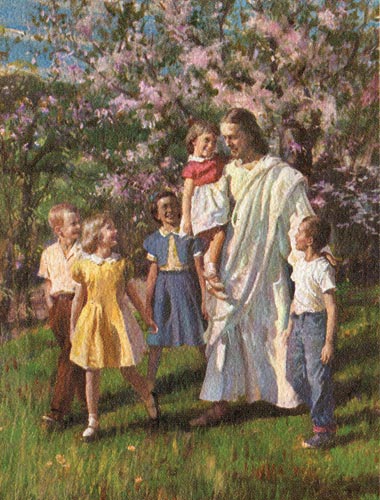
Jesus knows you personally from birth. Moreover, Jesus as the Son of God with the Father know us intimately. Have a look at a few points Jesus articulated on how He knows every one of His people on earth. He came to reveal the love of His heavenly Father to us. Speaking of little children that He was blessing He said, “See that you do not despise one of these little ones. For I tell you that their angels in heaven always see the face of my Father in heaven.” (Matthew 18:10 NASB) Children have angles watching over them as military guards on behalf of the Father and the Son.

Jesus knew every disciple before He selected them. When He saw Nathanael coming towards Him, He said, “there is an Israelite without any deceit in Him”. “Nathanael said to him, “How do you know me?” Jesus answered him, “Before Philip called you, when you were under the fig tree, I saw you.” (John 1:48 ESV)
Jesus like His Father in heaven knows us even prior to our birth. Jesus created this earth as noted by the apostle Paul, whom Jesus chose to articulate His mission on earth. He said: “He is the image of the invisible God, the firstborn of all creation. For by him all things were created, in heaven and on earth, visible and invisible, whether thrones or dominions or rulers or authorities—all things were created through him and for him. And he is before all things, and in him all things hold together.” (Col. 1: 15-17 ESV)
The entire bible speaks of God’s intimacy with mankind. King David noted God’s creative powers attributed to His birth: “For you formed my inward parts; you knitted me together in my mother’s womb.” (Ps. 139: 13 ESV) He also admitted that God personally knew him, that God is not some abstract unknown being or force or many gods who play handball with our minds [Montaigne], but one who is intimate with His people: “O LORD, you have searched me and known me!” and further that He knows every action and thought of our being: “You know when I sit down and when I rise up; you discern my thoughts from afar. You search out my path and my lying down and are acquainted with all my ways”. (Ps. 139: 1-3 ESV)
Jesus knows the time of a man’s death. When Jesus was summoned by Mary and Martha, the sisters of Lazarus, he knew that Lazarus would ultimately live: “Lazarus was ill. So the sisters sent to him, saying, “Lord, he whom you love is ill”. But when Jesus heard it he said, “This illness does not lead to death. It is for the glory of God so that the Son of God may be glorified through it.” (John 11:2-4 ESV) In a short while, Lazarus died though Jesus brought him back to life which glorified God.
Jesus knows who have the faith to follow His truth and way. Jesus is actually aware of who will accept the teaching of His death and resurrection as an act which He achieved on behalf of sinful man to redeem him legally from eternal death – in other words, Jesus died in your place as a substitutionary ransom for your life. He died so that you would go to heaven ultimately to be with Him. “All have sinned and fall short of the glory of God” (Rom. 3:23 NIV) because “When Adam sinned, sin entered the world. Adam’s sin brought death, so death spread to everyone, for everyone sinned”. (Rom. 5:12 NLT)
Jesus does not forget his own children. My mother loved this text and held on to it until the day that she died: “I go and prepare a place for you, I will come and take you to be with me that you also may be where I am” (John 14:3 NIV)
The Gospel simply means the Good News to mankind. The Gospel only asks that by faith you accept this and in so doing you accept that Jesus is your creator and sustainer in Life and after your death He will give you eternal life. Knowing the mind of man, and what is in man’s motives and thoughts towards Him, he calls those whose heart will hear the calling via the Spirit: “For those whom he foreknew he also predestined to be conformed to the ways of his Son” and, “those whom he predestined he also called, and those whom he called he also justified, and those whom he justified he also glorified” (Rom. 8:29-30)
By accepting Jesus as the Way, the Truth and the sustainer of your life – of all Life, we are forgiven and the legal term is justified, made right with God by your faith in Jesus. Not a bad deal, I would say if you trust Him by faith as I do and as my mother did. If you have a struggle with faith, pray to Jesus to show you the way to believe. Say “Lord, help my unbelief”.
He is still calling men and women to Himself. “Come to me, all you who are weary and burdened, and I will give you rest” (Matt. 11:28)
Christ is our High Priest of the New Covenant
The Jews had revelations given to them from God through the old prophets including Moses during the Exodus from Egypt. Many years later Jesus Christ came to earth through His incarnation teaching a new and expanded message of salvation.
“Long ago, at many times and in many ways, God spoke to our fathers by the prophets, but in these last days he has spoken to us by his Son, whom he appointed the heir of all things, through whom also he created the world. He is the radiance of the glory of God and the exact imprint of his nature, and he upholds the universe by the word of his power. (Hebrews 1:1-3 ESV)
A new perspective on our relationship with God
Indicating the relationship of Jesus to the heavenly Father, we note from the above verse:
1. God now spoke to His people directly by his Son.
2. God appointed Jesus Christ heir of all things.
3. God created the world, including His people through Christ “whom also he created the world” (vs. 2).
4. Christ “is the radiance of the glory of God and the exact imprint of his nature”—I want to emphasize exact imprint of the mind, character, power and being of His Father.
5. Christ “upholds the universe by the word of his power”—sustains the entire universe by the command of his power.
Christ’s all-encompassing, and all-commanding power was and remains the same because he is God, one with the Father and the Holy Spirit. Christ’s participation in the godhead was validated by His miracles to heal, raise the dead and calm the seas. He is far greater than the prophets of old.
Jehovah Witnesses and Muslims claim Jesus was only a prophet and a man, not conceding to the fact that he is God. The portrayal of Christ in Hebrews adds to the facts regarding the deity of Christ and compares with the letter of Paul to the Colossians:
“He is the image of the invisible God, the firstborn of all creation. For by Him all things were created, both in the heavens and on earth, visible and invisible, whether thrones or dominions or rulers or authorities—all things have been created through Him and for Him. He is before all things, and in Him all things hold together. He is also head of the body, the church; and He is the beginning, the firstborn from the dead, so that He Himself will come to have first place in everything. For it was the Father’s good pleasure for all the fullness to dwell in Him, and through Him to reconcile all things to Himself, having made peace through the blood of His cross; through Him, I say, whether things on earth or things in heaven”. (Colossians 1:15-20 NIV)
We also see this in the Gospel of John, the first chapter:
“He was in the beginning with God. All things were made through him, and without him was not anything made that was made”. (John 1: 2-3 ESV)
When we acknowledge that Jesus Christ is God we can understand why Jesus has the authority to be our mediator on earth, between mankind and His Father, demonstrated when he created all mankind by directing His power over the universe.
The High Priestly Ministry of Christ
Since the fall of man in the garden of Eden, “death has passed unto all men” because “the wages of sin is death” (Romans 6:23) Man is disconnected from God and needed our Lord Jesus Christ to show us the way to return to Him.
The entire work of Christ is to mediate our reunification to his Father. He achieves this as our High Priest, seated in the place of highest honour in heaven, at God’s right hand. God gave Jesus the seat of universal authority when He said, “Sit at my right hand until I make your enemies a footstool for your feet” (vs.13)
This place at God’s right hand belonged to Christ because he was more than just a high priest; he is God’s Son. Until Christ the Jewish priestly ministry advocated with God on behalf sinful man—it was only a representation or shadow of what was to come in Christ. Until Christ arrived on the scene it was only to “serve a copy and shadow of the heavenly things” (vs. 8:5). Christ’s ministry is the reality which the shadow-type pointed to.
The ceremonies of sacrificing animals to atone for man’s sin was only a dim illustration of what was coming—only theological symbols of the final great significance of Christ’s work to redeem man as the “Lamb of God who takes away the sin of the world” as the apostle John pointed out.
Christ, as our High Priest, in lieu of the animal-type offering, made the real and effective sin-offering. He offered his own life to God in our place—the perfect gift that could never be surpassed. “He sacrificed Himself on the cross” (Hebrews 7:27 ESV).
Christ’s sacrifice is all-sufficient; that is, all sins are covered in his once-for-all offering to God. Therefore, his role as priest, his sacrifice, and his service to God all surpass the symbolic plan under the old covenant. The book of Hebrews does not try to describe heaven; instead, it shows how Christ serves in a better, more personal way than any other priest could.
The emphasis on the shadow ministry of the old covenant Jewish practices in the temple are clearly noted as being replaced entirely by the ministry of Christ as our High Priest: “But as it is, Christ has obtained a ministry that is as much more excellent than the old as the covenant he mediates is better, since it is enacted on better promises. For if that first covenant had been faultless, there would have been no occasion to look for a second” (vss. 8:6-7)
Jesus’ ministry emphasized a shift from an old covenant methodology of getting right with God using tradition and symbolism, to an entirely new new covenant (agreement with God) which is superior for several reasons.
What the New Covenant (NC) achieved to supersede the old:
• fulfills, ends, and replaces the priest’s’ ministry and the old covenant;
• Christ’s ministry lasts for eternity, because Jesus is High Priest forever;
• Jesus dies on the cross, and thus the NC requires no further sacrifices;
• Jesus accomplished what all the other sacrifices could not do—it truly atones for our sin;
• The death of Christ provided a substitute death taking the place for our eternal death, ransomed humanity giving us the opportunity to have a personal relationship with God (see vss. 8:10–11).
The old covenant was an imperfect shadow in the progression leading to the reality found in Christ: “if that first covenant had been faultless, there would have been no occasion to look for a second” (vs. 8:7) The need for a second covenant implies that the first covenant was faulty. Does this mean that God ordered Moses and Aaron (head of the Levitical High Priesthood) to begin a way of worship that was mistaken or poorly contracted? No, but the old covenant was in every way preparatory for and pointing to the dynamic of the new covenant (see 7:11–19; also Romans 3–4; 9–11).
The new covenant was prophesied long before Christ’s introduction of the New Covenant as coming to replace the old covenant. The following is a quote from the prophet Jeremiah:
“For he finds fault with them when he says: “Behold, the days are coming, declares the Lord, when I will establish a new covenant with the house of Israel and with the house of Judah, not like the covenant that I made with their fathers on the day when I took them by the hand to bring them out of the land of Egypt” (Hebrews 8:8-9 ESV; cited from Jeremiah 31:31)
Since the people continually broke God’s covenant, God found fault with the old covenant. A part of the covenant involved keeping God’s laws; however, the Israelites chose to disobey (see Jeremiah 7:23–24). When they failed to keep the requirements imposed on them, they broke the covenant. God, however, promised a new covenant that would not be filled with ceremonial laws about sacrifices and other external responsibilities. Rather, it would bring about spiritual reconciliation by producing a change in people’s inner beings by being born again of God’s Holy Spirit.
The old covenant was replaced because it was not eternal, not sufficient to completely deal with sin, and could not provide sinful humanity with a relationship with God. In its time, however, the old covenant was necessary which would lead us to Christ—teaching man that he cannot be saved by trying to be good, but by allowing the Spirit of Christ to dwell within the heart.
Why the new covenant replaced the new covenant?
The old covenant needed to be replaced by a better covenant, as was prophesied by Jeremiah and quoted in the following verses. Hebrews 8:10–12 quotes Jeremiah 31:31–34, which is the longest Old Testament quotation in the New Testament. Jeremiah prophesied about a future time when a better covenant would be established, because the first covenant, given to Moses at Mount Sinai, was imperfect and provisional for its time.
The Israelites could not maintain faithfulness to it because their hearts had not been truly changed. This change of heart required Jesus’ full sacrifice to remove sin and offer us the Holy Spirit’s permanent indwelling. When we turn our lives over to Christ, the Holy Spirit instils in us a desire to obey God in a personal relationship with him, and this is accomplished under the new covenant/agreement. Jeremiah prophesied of the coming change in the covenants—the new to replace the old.
“For this is the covenant that I will make with the house of Israel after those days, declares the Lord: I will put my laws into their minds, and write them on their hearts, and I will be their God, and they shall be my people. And they shall not teach, each one his neighbour and each one his brother, saying, ‘Know the Lord,’ for they shall all know me, from the least of them to the greatest. For I will be merciful toward their iniquities, and I will remember their sins no more”. (Hebrews 8:10-12 ESV; cited from Jeremiah 31:32-34)
The new covenant made the old covenant entirely obsolete.
When Christ died on the cross the curtain between the Most Holy places was ripped in two during an earthquake indicating the end of the old temple’s sacrificial services: “…behold, the curtain of the temple was torn in two, from top to bottom. And the earth shook, and the rocks were split” (Matthew 27:51 ESV)
“In speaking of a new covenant, he makes the first one obsolete. And what is becoming obsolete and growing old is ready to vanish away” (Hebrews 8:13 ESV) The old one was fulfilled by Christ and completed by him; therefore, it was no longer needed. Old systems, old sacrifices, and the old priesthood now have no value in securing God’s approval.
Under God’s new covenant, God’s law is inside us. The 10 commandment laws are expanded by Christ in the new covenant. The Spirit of the expanded law encompasses and admits that all these ten moral laws were “holy just and good” (Romans 7: 12 KJV) The sacrificial ceremonial laws were changed, not the moral law of God which is His standard. Most great theologians such as Martin Luther, John Calvin, John Owens, and John Wesley have agreed with this theological premise.
For example, most agree, that Christ’ teaching that “to look at a woman to lust for her”, is the initiating intention to break the law “do not commit adultery” in your heart, which is where the new covenant is directed by the Spirit.
It is no longer an external set of rules and principles. The Holy Spirit reminds us of Christ’s words, activates our consciences, influences our motives and desires, and makes us want to obey. Now we desire to do God’s will with all our heart and mind.
The new covenant has four provisions as noted in Hebrews 8: 10-12:
1. The new covenant provides inward change: “I will put my laws in their minds … I will write them on their hearts.” This means having a new “heart,” and with it a new sense of intimacy with God where he is known as Father and where Christians are known as children of God and heirs. This new heart opens the way for people’s relationship with God to be realized at a personal level (not just through earthly priests as intermediaries). Having these laws written on our hearts motivates us to want to obey God.
2. The new covenant provides intimacy with God: “I will be their God, and they will be my people.” This reveals a positive, close relationship between God and his people. In the first covenant, people continually failed to live up to this relationship. In the new covenant, this relationship is secured through Jesus Christ. Although the promise was always there, it now has a newer and richer meaning because of the provision of Christ offering us forgiveness and redemption from sin and the hope of eternal life (versus eternal death).
3. The new covenant provides knowledge of God: “Everyone, from the least to the greatest, will already know me.” The new covenant brings a new relationship between people and God, making each believer a priest (1 Peter 2:5, 9). Every believer has access to God through prayer. Every believer can understand God’s saving promises as revealed in the Bible because he or she has God as a living presence via the Holy Spirit in his or her heart. There will still be the need for teachers, but every believer will be able to know God—not just priests or a select few.
4. The new covenant provides complete forgiveness from sins: “I will forgive their wrongdoings, and I will never again remember their sins.” People of the old covenant had forgiveness of sins (see Exodus 34:6–8; Micah 7:18–20), but they had experienced an incomplete, not lasting forgiveness as demonstrated by the ongoing need for daily and annual sacrifices for sins to be made for their sins. In the new covenant, sin and its effect of separating people from God are eliminated. God wipes out the memory of sin and reckons sin as if it had never occurred. Sin’s impact on our lives is completely overcome, making it possible for believers to receive the promised blessing. There is no longer any barrier to our relationship with God.
Only relationship-based motives of faith and love towards God through Jesus Christ brings about a true righteousness that could not be known under the old covenant. “We love because he first loved us” (1 John 4:19 NIV)
Understanding the shift from the old to the new covenant is a vital truth misunderstood by many well-meaning Christians. It emphasizes a shift from salvation by works, to salvation by faith in Jesus Christ provided by His sacrifice for our sins, replacing the old shadow animal sacrifices, symbolic of the true and sufficient sacrifice “once and for all” achieved in Christ. He ministers to us via the Holy Spirit with an emphasis on living by faith.
Be assured beloved that “We have this as a sure and steadfast anchor of the soul, a hope that enters into the inner place behind the curtain, where Jesus has gone as a forerunner on our behalf, having become a high priest forever” (Hebrews 6:19-20 ESV)

Let Your Love Light Shine!
The Manifesto of God’s Love for You: Part 2
by Glen R. Jackman
In the Greco-Roman world, only the wealthy could afford the luxury of having a facial mask sculptured. Today we use photographs or paintings, as well as sculptures which are usually of famous men like Churchill or Lincoln. The following mask was unearthed from an ancient ruin site in Greece. Deterioration due to its age has made it appear to have tears running profusely from its eyes. When I see this photo it reminds me of the misunderstanding of God’s love for those he came to redeem – a visual allegory for the dysfunction of love in our world. We do selfies galore to boost our self-worth or to fit in with society, but inside we may feel a degree of disconnect from others. We can feel unloved, like an outcast or lack mutual trust.

Photo by Glen R. Jackman
Jesus foretold our day in which we live: “Sin [missing the mark of love] will be rampant everywhere and the love of many will grow cold”. (Matt 24:12) The apostle Paul said the same thing, with an emphasis on the powers of love becoming self-directed; not firstly God directed, and further not properly expressed to others: “For people will love only themselves and their money. They will be boastful and proud, scoffing at God, disobedient to their parents, and ungrateful. They will consider nothing sacred”. (2 Timothy 3:2) Many people today are breaking the two laws of love, considering “nothing sacred” while “scoffing at God” and loving “only themselves and their money”. Do you see this in our current society?
Jesus spoke of the two laws as all encompassing to live by:
“You shall love the Lord your God with all your heart and with all your soul and with all your strength and with all your mind, and your neighbor as yourself.” (Luke 10:27; cf. Deut 6:5, Lev 19:18 ESV)
Our hearts often deceive us and create thoughts and emotions that are destructive and against the second law of love, to truly love others. A man spoke up “desiring to justify himself, said to Jesus, ‘And who is my neighbor?’” (vs. 29) When Jesus spoke of the heart, he meant the mind. He knew our problem was a universal issue that most people struggle with at some point in their lives. We do not, and we cannot change our way of thinking, when we continue to disobey the commands to love both God and others.
Why does loving God become a determining factor?
If we side-step loving God with an attempt to love others without His influence, this will fail, because we cannot appropriate the blessings of love without abiding by the first principle addressed by Jesus Christ in our life, to love God. Love is empowered by the Spirit of God, when God is reciprocally loved in return for His love. In fact God, who “is Love”, manifests His uniting love, when two or more people, who love God meet or converse: “For where two or three gather together as my followers, I am there among them”. (Matthew 18:20 NIV) Moreover God’s love is reliable and inseparable from loving others: “…we know and rely on the love God has for us. God is love. Whoever lives in love lives in God, and God in him”. (1 John 4:16 NIV)
This is often seen when one or more individuals’ unity appears to cool off and drift. A man cannot fully comprehend love without understanding the motivation of God’s love from His source purpose to bless the families He created and to have generations taught to love and serve Him first: “But the love of the Lord remains forever with those who fear him. His salvation extends to the children’s children” (Psalms 103:17) The acknowledgement of God’s love in the widening circles of the family can be noted in many scriptures such as: “Let this be written for a future generation, that a people not yet created may praise the Lord” (Ps 102:18)
Without understanding the two principles of love as Jesus taught, the Agape love of God uniting the family in a generation-to-generation continuum via the powers of love, unity begins to break down in either the first or a successive generation. Consciences are then weakened, love fades, division occurs, and mankind begins to prey on one another’s weaknesses magnifying our selfish fallen nature in our society. Jesus taught: “If a house is divided against itself, that house cannot stand”. (Mark 3:25)
Our best human analogy of the characteristics of love permeating interrelating minds together is in a sharing relationship of two loving individuals sharing mutual dependence upon one another as found in the case of a genuine marriage. Here a man and a woman become “one flesh”; that is, live according to a common life pattern of loving God and each other. There is no more creative human relationship either physically or spiritually. The outcome of this affects the children and our grandchildren. Likewise, for the Christian individual the new life in Christ is unexcelled in bringing meaning and hope to life lovingly with others – family and friends alike.

Clarifying the term “sin”
Because all true law is based on Agape love, when we misperceive this love, we will misunderstand that all God’s moral laws are intended to support His Spirit’s empowerment of love for the good of man. Breaking any one of God’s laws premised on God’s true love, is referred to as “sin”: “Everyone who sins is breaking God’s law, for all sin is contrary to the law of God”. (1 John 3:4) Another way of putting it is “sin is breaking the principles of true love (Agape)”. The end result of this misconception of love is that sin is man living from the center of his selfish heart, which is the opposite of living by the Spirit directing a man in the path of God’s motive of true love.
Why has man become so selfish?
Bear in mind, that Jesus came to teach us why we were and still remain in a mess. Today with many temptations at every turn, the mind’s judgments may not be based on the protective Spirit managing Agape love from within. The mind is easily distracted and wanders off in any one of the mind-sets and behaviors that destroy love, ways that Jesus pointed out. The primary mistake man makes is the misuse of his free will when he begins to follow his lust versus the guidance of God: “For from within, out of a person’s mind, come evil thoughts, sexual immorality, theft, murder, adultery, greed, wickedness, deceit, lustful desires, envy, slander, pride, and foolishness”. (Mark 7:21)
How do we limit our selfishness?
God promised to abide “within” our hearts/minds but Jesus noted it is the mind “within” that actually creates these thoughts, precursors to behaviors. So what is our society’s main problem? The majority of people no longer acknowledge, listen to, or have the Spirit of God abiding in them. “Or do you not know that your body is a temple of the Holy Spirit within you, whom you have from God?” (1 Cor 6:19) Many have entirely ignored, or defiantly shut the Spirit of God out of their lives, as they freely choose to walk separate from God. Mankind has developed many philosophies, physiological reasons, academic replacement theories, 1,000 religions, ideologies, idolization, corruptions of God’s good gifts such as sex, and endless superstitions to side-step facing the truth of our dilemma.
Jesus taught that there is an aspect of our heart that leans towards thoughts that miss the mark of love, which leads to deeds that harm others. “Sin” is missing the mark of love. Sin is the antithesis to love. This aspect of man’s anti-love character has separated man from others and his God. All the prophets talked about this problem. Jeremiah, one of the greatest prophets, wrote: “The heart is deceitful above all things and beyond cure. Who can understand it?” (Jer 17:9) And Job was one of the few men on earth that remained close to God in ancient times. He said: “Who can bring what is pure from the impure? No one!” (Job 14:4) Thus our efforts to live within the scope of good behavior, becomes impossible without the indwelling Spirit, regardless of the many alternate views we accept to explain man’s love-less mean disposition, or the popular masks that we hide behind in order to fit in with the world’s viewpoint that it is more important to take care of number one, at all costs, including the value of loving others.
Why can’t a man make himself good?
Paul taught that people who do not practice the two laws of love can lose their conscience, one of the perceptive faculties of the conscious mind: “Now the Holy Spirit tells us clearly that in the last times some will turn away from the true faith; they will follow deceptive spirits and teachings …their consciences are dead”. (1 Tim 4:1-2) Mankind is medically concerned about various diseases of the mind such as Schizophrenia, Alzheimer’s, Mad Cow disease etc., but are we collectively concerned about losing our individual consciences, the governing, directorial facility of our mind?

The ruination of our consciences has been achieved through deceptive “teachings”. Much of our loss of love can be attributed to the influence of others who deny the love commands given by God, beginning by hating, not loving God: “They are backstabbers, haters of God, insolent, proud, and boastful”. (Romans 1:30) Many influential people in society loathe the Bible as “haters of God”, denying His very existence and refer back historically to the defamation of Christianity in general by the errors of both Catholicism and Protestantism, such as the “holy wars” and the terrible acts against martyrs and those who did not believe specific doctrinal truths. I agree that the history of the false front of Christendom as religious eccentricity, ecclesiastically and gross times of militaristic intent was horrific, and failed for the same reason that we are failing in society today while living in a false pretense of love. It failed because it was devoid of the empowering Spirit of God and His Agape love.
The only restoration of love for God and our fellow man is firstly to be restored to friendship with God, through Jesus Christ: “For since our friendship with God was restored by the death of his Son while we were still his enemies, we will certainly be saved through the life of his Son”. (Rom 5:10)
Jesus was not far off when He said: “What comes out of a man’s heart is what makes him ‘unclean.’” (Mark 7:20) “Unclean” is a term that means that mankind in general trends towards collectively corrupting his purpose of life, to love God and others. Corrupting himself, by either not understanding or by disobeying the command to love God first and others reciprocally, mankind has collectively separated from God.
Jesus Christ has offered to give mankind a better view of our heavenly Father’s love and has given us the Spirit to restore our capacity to love God and each other. As the song goes, Let Your Love Light Shine!

Living with Christ as Your Example

…it is written, “Be holy, because I am holy.” 1 Peter 1:16
Article by Glen R. Jackman
As a Christian desiring to imitate the Lord’s manner of living among men on earth, we must take note of His personal life and teachings as our mentor. His instruction is there for all of us in the Gospel. The New Testament’s availability was designed by God, in order that we may be influenced by His life and be conformed character-wise into the image of His Son.
By beholding His life, a desire to conduct one’s life similarly on earth touches our affections. This is the purpose of the Bible. To influence our hearts by Christ’s display of love for others, as He sought to reconcile man with His Father. “And we all…beholding the glory of the Lord, are being transformed into the same image from one degree of glory to another. For this comes from the Lord who is the Spirit” (2 Corinthians 3:18 ESV) From one degree of glory to another is the key takeaway. Growing in the Christian life is progressive, not immediate.
The Puritan theologian, John Owen whose writing I enjoy, was chaplain to Sir Oliver Cromwell and regarded as a practical scholar of the Word of God in his time. He stated that “Faith will cast the soul into the form or frame of the thing believed”. It is important, therefore, to understand what the Bible says, to help shape our beliefs as we study the life of Christ.
With the Holy Spirit’s help, we form a belief that it is the will of God in these matters, that Christ be our example. “Faith comes by the hearing of the Word” (Romans 10:17). Some may discount this view. They may feel that aiming to be like Christ is an unreachable perfectionist desire and a recipe for failure. However we can choose to aim and we can grow towards this viewpoint: “Previously, you let yourselves be slaves to impurity and lawlessness, which led ever deeper into sin. Now you must give yourselves to be slaves to righteous living so that you will become holy” (Rom 6:19 NLT)
As a grandfather I understand that if my granddaughter does not first play tee-ball, she may not learn to understand baseball in all its fullness nor enjoy the game with her peers as my daughters have over the years. Even tee-ball develops a certain discipline to pay attention to what matters, yet we are patient with our children just as Christ is with us.

By reading the Gospels we can see the wonderful graces of Christ’s kindness to others while living as a man. We can also see His example in carrying out the duties of obedience to His Father as a man. The human nature of mankind was indwelt by Jesus, incarnated by Him, yet Christ had the divine image of God as it was implanted in it, via the Holy Spirit at His virgin birth.
He did not inherit the gross nature of sin as we do as sons of Adam. He did however inherit our weakened human nature as being the Son of man, within which nature Christ lived as a man on the earth as “God with us” via his birth as man, indwelt by the Holy Spirit. Owen notes that He did not inherit all the gross propensities and long effects of sin as do each of us as children born into a lineage of a fallen race – fallen when Adam sinned and lost his privilege of living in the light of the presence of God in Eden.
For he derived not his nature from Adam in the same way that we do; nor was he ever in Adam as the public representative of our nature, as we were. But our nature in him had the image of God implanted in it, which was lost and separated from the same nature…
The apostle Paul bears out the fact that Jesus Christ was and is God who prior to the incarnation and after His ascension “is the image of the invisible God, the firstborn of all creation. For by Him all things were created, both in the heavens and on earth, visible and invisible, whether thrones or dominions or rulers or authorities—all things have been created through Him and for Him. He is before all things, and in Him all things hold together” (Colossians 1: 15-17 NASV) John Owen adds that it was God’s intent to have us follow Christ’s example as a man on earth:
…the infinite wisdom of God had this farther design in it also,—namely, that he might be the pattern and example of the renovation of the image of God in us, and of the glory that doth ensue thereon. He is in the eye of God as the idea of what he intends in us, in the communication of grace and glory; and he ought to be so in ours, as unto all that we aim at in a way of duty.
We are predestined to be changed into Christ’s image in order to represent His character. We are predestined to be renovated to the state of what Adam lost in the garden of Eden: “For those whom he foreknew he also predestined to be conformed to the image of his Son, in order that he might be the firstborn among many brothers. And those whom he predestined he also called, and those whom he called he also justified… ” (Romans 8:29-30 ESV).
Consider how important it is to raise your children up for Jesus Christ that they also will take the Gospel seriously. They will be faced with many temptations in the world as they grow up and are tempted by the popular culture. (A few pictures of my children are used in this article from my youthful days of ministry)

The whole inheritance of Christ as sons of God is offered to us that we may be glorified by following His life and in Spirit-union with Him. Certainly we can only share the glory of Christ as we reflect His lifestyle to others on earth as the Holy Spirit empowers us to do so. The development of Christian character is a lifelong process during our lives on earth “until we all attain to the unity of the faith and of the knowledge of the Son of God, to mature manhood, to the measure of the stature of the fullness of Christ” (Ephesians 4:13 ESV).
Our personal growth in Christ will be carried out to the degree or the measure that we allow the Spirit of God to lead us into holy living, “for those who are led by the Spirit of God are the children of God” (Romans 8:14 NIV). And it is clear that the ultimate standard of that measure is Christ Himself.
It is all about aiming to please Christ, aiming to reflect His goodness in our worship to God and in our relations with others. It is by beholding Him in scripture that we are changed into His likeness, as this was the Father’s good intention for us.
Knowing that Christ is our example, our standard of measure whom we seek to emulate, we will always know that in comparison to Him, we are sinners in need of divine grace, “Not that I have already obtained this or am already perfect, but I press on to make it my own, because Christ Jesus has made me his own” (Philippians 3:16, 12 ESV)
From one degree of glory to another is how we grow as Christians. The process is is progressive, not immediate.
God Knows our Mind
By Glen R. Jackman
For the word of God is living and active, sharper than any two-edged sword, piercing to the division of soul and of spirit, of joints and of marrow, and discerning the thoughts and intentions of the heart. (Hebrews 4:12 ESV)
God understands our thoughts and discerns the motives of our mind, which is clear from the above verse: “discerning the thoughts and intentions of the heart”. The NLT version uses the word “exposes” for discerning while the NIV uses the word “judges”. The reality is that God knows our thoughts and as our creator assesses the construction of our attitudes framing all our thinking which is the cause and effect of our actions – our deeds. This is a truth that the great prophet Jeremiah pointed out when the majority of the Israelite’s due to wayward leadership, had wandered away from God, and would soon go into captivity under His judgement: “I the LORD search the heart and examine the mind, to reward each person according to their conduct, according to what their deeds deserve.” (Jeremiah 17:10 NIV) The link between Yahweh assessing the mind is directly related to our outward actions towards God and man: “according to…their deeds”.
God Searches our hearts
As we seek to follow the Lord in holiness, we need to comprehend that He is indeed aware of our every thought. Jesus while on earth, indicated that he knew the thoughts of men before they even spoke: “Jesus knowing their thoughts said, ‘Why are you thinking evil in your hearts?’” (Matthew 9:4 NAS) He reiterated this ability as our Lord in heaven – he searches our hearts in relation to our deeds: “I am He who searches the minds and hearts; and I will give to each one of you according to your deeds.” (Revelation 2:23 NASV)
This revelation of God’s unity with us in mind as our creator who has set guidelines for our thinking, was expanded by our Lord in His Sermon on the Mount: “but I say to you that everyone who looks at a woman with lust for her has already committed adultery with her in his heart”. (Matthew 5:28 NASV) Jesus was expanding the principles of the New Covenant based on the axiom of love. He would further pray that His disciples live out this maximal importance of unity of thinking based on the Law of Love with the effect that others would believe in the Gospel mission of redemption. He prayed: “that they may all be one, just as you, Father, are in me, and I in you, that they also may be in us, so that the world may believe that you have sent me”. (John 17:21 ESV)
Paul would echo this in his writing. He advocated that we would have our minds lined up with God’s mind to reflect His views on life and His Sovereign governance: “Have this mind in you, which was also in Christ Jesus” and that God would give us “the same attitude of mind toward each other that Christ Jesus had”, with the primary intention “that with one mind and one voice you may glorify the God and Father of our Lord Jesus Christ” (Philippians 2:5; Romans 15:5-6 NASV )
Understanding God’s Mind as a Master Database
With our ability to search rapidly for any theory or information that man has ever developed or philosophies conceived, it is easy for us to fathom a God who can know what we are thinking and/or search our minds which He made. Moreover He wants to bring our mind into harmony with His will via our unity of mind with Him to the extent that the Spirit Himself prays for us to achieve this. “He who searches the hearts knows what the mind of the Spirit is, because He intercedes for the saints according to the will of God” (Romans 8:27 NASV) King David contemplated this unity of mind when he wrote his beautiful Psalm about God’s all-knowing watch care: “You have searched me, LORD, and you know me” (Psalm 139:1 NIV) This ability to knowingly search our mind is prophesied also by Jeremiah. God said to him: “I the LORD search the heart and examine the mind” (Jeremiah 17:10 NIV)
Some may think that they can side-step God’s two royal laws as His mandate to live according to love by both loving the Lord first and your neighbour as yourself (cf. Matthew 22:39) without saying “Lord who is my neighbour?” Of the Pharisees He said, “You are the ones who justify yourselves in the eyes of others, but God knows your hearts. ‘What people value highly is detestable in God’s sight’” (Luke 15:15 NIV). His all-knowingness was confessed to the Lord when the disciples prayed for mission guidance “Lord, you know everyone’s heart. Show us which of these two you have chosen” (Acts 1:24 NIV)

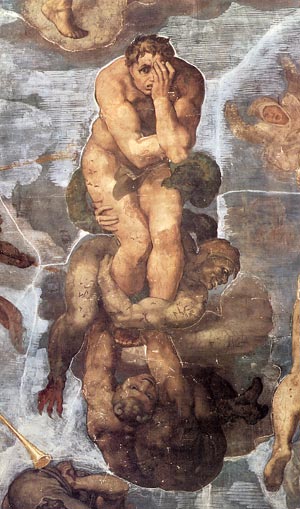
Michelangelo, The Last Judgement, Sistine Chapel Ceiling
Benedict Spinoza was a Jewish philosopher who understood the reason why and how God knows our every thought. When you study his Ethics he evidently viewed our lesser mind as inset in God’s Sovereign Mind which governs our thoughts by inspiring or by judiciously knowing them. He points out that our thoughts are inadequate compared to His own, which any Christian will admit is true. What he developed was the truth that our minds are operative and functional as tandem to and housed in God’s primary Mind: “whatsoever takes place in the object constituting the idea of the human mind, the knowledge thereof is necessarily in God, in so far as he constitutes the essence of the human mind.” This does not mean that God condones sinful thinking. He rather patiently allows it until the second advent of Jesus Christ.
When we contemplate the importance of thinking holy thoughts as we are resident minds within His overseeing mind, as One with Him, we are deeply humbled as we also realize that our thoughts, if not monitored, self-controlled and carefully submitted to the Holy Spirit’s leading, can be corrupted by this world’s influence in which we live, even as little as having a judgemental attitude toward an erring brother. As Christians, we must understand Christ’s priestly prayer to His Father on our behalf, to be united in mind with Him as He is united in Mind with the Father.
Spinoza though not a professing Christian gets this right: “whatsoever takes place in the object constituting the idea of the human mind, the knowledge thereof is necessarily in God, in so far as he constitutes the essence of the human mind”. Considering that we are made in His image, his deduction about man’s thinking is profound: “the essence of man is constituted by certain modifications of the attributes of God”.
We can also fathom why God is vindicated when we abuse our rights and misuse our minds to think ungodly thoughts. Many today are tempted by think of the lusts of the flesh as this is rampant in our culture. Spinoza using careful deductive reasoning comes to the realization that we are, in my own words, hosted minds within God’s Mind. To abuse this honour would be dangerously parasitic. We have looked at scripture which supports this view that God with responsibility only to His own glory must finally judge men and women who live wildly without concern for His allowance of our operative mind as secondary to His Mind, and concomitant life within and secondary to His source of life – via the Spirit, and connected to His being as the great I am:
Everyone must surely admit, that nothing can be or be conceived without God. All men agree that God is the one and only cause of all things, both of their essence and of their existence; that is, God is not only the cause of things in respect to their being made (secundum fieri), but also in respect to their being (secundum esse).
God will vindicate His holiness and magnify His glory at the final judgement ushered in when Christ comes in the clouds in His full glory with all His holy angels to separate the godly from the ungodly: “Let the evildoer still do evil, and the filthy still be filthy, and the righteous still do right, and the holy still be holy.” (Revelation 22:11 KJV)